What Is a Data Matrix Code?
Data Matrix is a two-dimensional (2D) barcode that consists of a pattern of black and white modules arranged within a square or rectangular area.
Its compact structure allows Data Matrix codes to store information in a relatively small space, making them suitable for applications where packaging space is limited.
In the medical device industry, Data Matrix codes can be used as part of product identification, labeling and traceability processes, depending on the requirements of the target market and applicable regulations.

Why Is Data Matrix Important for Medical Devices?
Medical devices often require clear and reliable product identification throughout the supply chain. An accurate coding and labeling process can help manufacturers manage products more efficiently and provide a basis for subsequent verification and traceability.
For large-volume medical device production, however, applying codes manually can be time-consuming and may increase the possibility of missed, damaged or incorrectly applied labels.This is where an automated labeling process can provide significant advantages.
How Does Automated Data Matrix Labeling Work?
To improve the efficiency and consistency of Data Matrix labeling, Kemei uses automated labeling equipment as part of the production process.
The overall process can be divided into several key steps:
1. Code Preparation
Before labeling, the required Data Matrix codes are prepared and organized according to the production requirements.
Proper code management is essential to ensure that the correct codes are used during the labeling process.
2. Code Verification
Before the labeling process begins, the codes are checked to help ensure that the data is complete and the codes are suitable for use.
This step helps reduce the risk of incorrect or unusable codes entering the production process.
3. Automated Labeling
The prepared labels are loaded into the automated labeling equipment. During production, the machine automatically applies the Data Matrix labels to the designated position of the packaging.Compared with fully manual labeling, automated equipment can improve production efficiency and provide more consistent labeling results, which is particularly useful for high-volume orders.
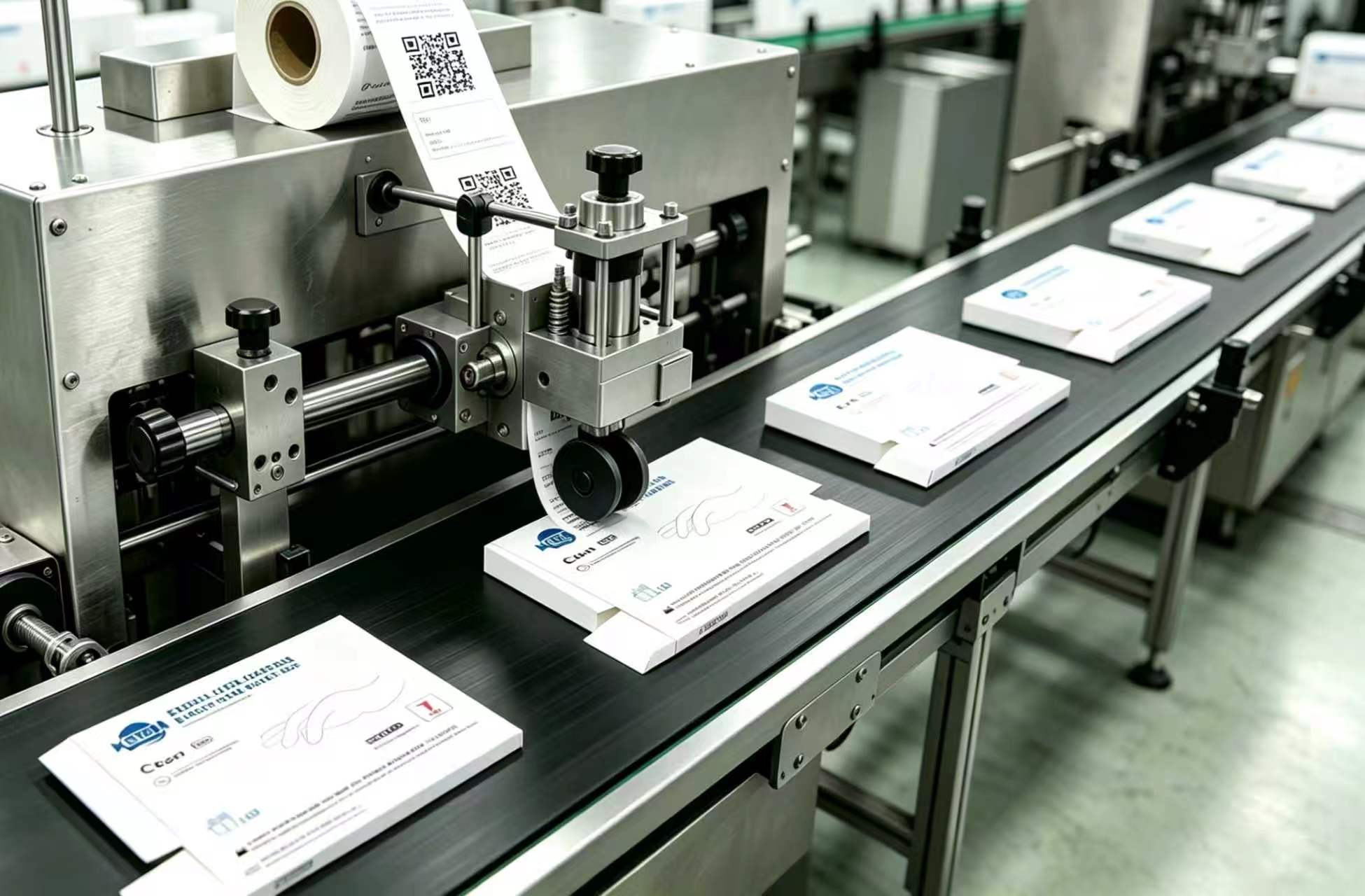
4. Packaging and Code Management
After labeling, the products proceed through the subsequent packaging process. During production, code usage can also be recorded and managed to support the consistency between the codes and the corresponding products or packaging units.For large-volume orders, systematic code management is particularly important for reducing manual errors and improving production control.
What Are the Benefits of Automated Data Matrix Labeling?
An automated labeling process can bring several benefits to medical device production:
Higher Efficiency
Automated labeling helps reduce repetitive manual operations and improves production efficiency for large-volume orders.
Consistent Labeling
The automated process helps maintain a more consistent labeling position and application method.
Reduced Manual Errors
Standardized operations can help reduce the risk of missed or incorrectly applied labels.
Better Code Management
Systematic code preparation, verification and recording provide better control over code usage throughout production.
Improved Traceability
Accurate code management provides a reliable basis for subsequent product identification and traceability.
Our Experience in the Russian Market
Different international markets may have different requirements for product identification and traceability. For manufacturers and exporters, understanding these requirements and adapting production processes accordingly is an important part of international business.
For orders supplied to the Russian market, Kemei has implemented a Data Matrix labeling process using automated labeling equipment.
From code preparation and verification to automated labeling and production records, each step is managed as part of the overall production process.This experience has strengthened our ability to support customers with market-specific labeling and packaging requirements while maintaining efficient and standardized production.

Supporting Global Medical Device Markets
As medical device markets continue to develop, product identification, labeling and traceability are becoming increasingly important in international trade.
Kemei continues to improve its manufacturing and packaging capabilities to meet the different requirements of global markets.The adoption of automated Data Matrix labeling is one example of how we continue to optimize our production processes and provide reliable support for international medical device orders.
Conclusion
Data Matrix labeling is more than simply applying a code to a product. For medical device manufacturers, it involves accurate code management, standardized labeling processes and effective production control.
With automated labeling equipment and an established production process, Kemei is able to support market-specific labeling requirements while improving efficiency and consistency.